
MIWATCH Blog: Reflections from Goldschmidt 2026: Mine Waste Remediation, Resource Recovery & the Road Ahead
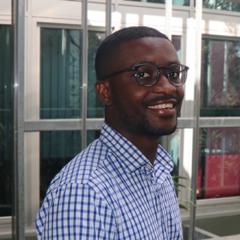
Goldschmidt 2026 in Montréal brought together the global geochemistry community at a pivotal moment for mine waste science. As co-chair and convener of session 05k – Challenges and Innovations in Mine Waste Remediation and Reprocessing for Sustainable Resource Recovery (Theme 05: Energy, Resources, and the Environment), I had the privilege of helping shape a day of discussions that spanned molecular-scale mechanisms to field-scale solutions. The session was co-convened with Matthew Lindsay (University of Saskatchewan), Bas Vriens (Queen’s University), Decla McParland (University of Waterloo), Kevin B. White (University of Waterloo), and Rosie Blannin (The University of Queensland). Bernd G. Lottermoser (RWTH Aachen University) delivered the keynote, setting a clear agenda for the next generation of waste-quality indicators.
I was joined by my colleague, Collins Adoko (PhD candidate at SMI - MIWATCH), and together we presented two complementary abstracts that sit at the intersection of bioleaching, mineral carbonation, and sustainable closure of legacy sites. What followed was a rich exchange of ideas on acid rock drainage (ARD/AMD), critical-metal recovery, carbon mineralisation, and the practical realities of remote and developing-world operations.

My Role as Co-Chair and Convener
Serving as co-chair for the afternoon block of 05k was both rewarding and intense. Alongside Decla McParland, I helped keep discussions focused while allowing space for cross-disciplinary dialogue that Goldschmidt does best. The session description itself captured the dual nature of mine waste: an environmental liability and a potential secondary resource for critical minerals. We explicitly sought contributions that bridge fundamental molecular-scale geochemistry with practical field-scale approaches – exactly the space where our own work sits.
The programme moved from hydrogeological modelling of Li extraction in salt flats, through microbial recovery of copper and gold, to zero-waste frameworks for iron removal from pregnant leach liquors. The breadth was intentional: remediation and reprocessing are no longer separate conversations.
Abstract Presentation 1: Fe-S-Oxidising Microbial Consortia for Polymetallic Mine Waste
Title: Fe-S-Oxidising Microbial Consortia for the Reprocessing of Polymetallic Mine Waste: A Case Study from Northern Queensland, Australia
Presenting author: Eric O. Ansah
Co-authors: Samadhi U Gunathunga, Ali Yadollahi, Olivia Mejías, Adithyanti Febriana, Gordon Southam, Anita Parbhakar-Fox, Susan TL Harrison
This study evaluated the bioleaching potential of waste rock from two northern Queensland sites – Rishton (RSA) and Baal Gammon (BGA) – by integrating detailed mineralogical and geochemical characterisation with 16S rRNA gene sequencing.
Key findings:
- RSA is dominated by aluminosilicates (75 %) with only 3 % pyrite and is classified as non-acid forming (NAF) despite 3.10 % S. Its high acid-neutralising capacity required pre-treatment (3.92 g H₂SO₄ kg⁻¹ over 21 days) to reach pH 2.0.
- BGA is potentially acid-forming (PAF) with NAG pH 2.1–2.2, 5.22 % S, and hosts chalcopyrite (5,753 ppm Cu) and minor sphalerite. It is therefore a natural candidate for direct bioleaching that simultaneously mitigates AMD risk.
- Batch bioleaching (0.5 – 1 mm particles, 50 days, 25 °C) showed that an indigenous BGA consortium dominated by Acidithiobacillaceae (40 – 62 %) and Leptospirillaceae (15 – 30 %) outperformed a non-indigenous Mt Morgan culture for zinc recovery from BGA (50 % vs 35 %). Copper recovery was comparable (~35 %) across treatments.
- RSA remained resistant to acidophilic bioleaching; alkaline bioleaching routes and improved mineral liberation are recommended next steps.
The take-home message was clear: coupling site-specific mineral characterisation with indigenous microbial consortia can enhance selective metal recovery from sulfidic PAF wastes, while NAF materials require a different toolbox.
Abstract Presentation 2: Enhanced Mineral Carbonation for CO₂ Sequestration and Arsenic Immobilisation
Title: Enhanced Mineral Carbonation for CO₂ Sequestration and Arsenic Immobilization in Legacy Mine Tailings: Insights from Croydon, Australia
Presenting author: Collins Adoko
Co-authors: Eric O. Ansah, Achyut Mishra, Sakshi Singh, Steven Micklethwaite, Anita Parbhakar-Fox
Australian mining operations generate 50 – 70 million tonnes of tailings and large volumes of saline mine-affected water (MAW) each year. Conventional remediation (reverse osmosis, lime neutralisation) carries high operational costs and carbon intensity. This work explores an integrated mineral-carbonation strategy that uses alkaline brine lixiviants derived from MAW to neutralise acidity, sequester arsenic, and store carbon as secondary carbonate minerals (magnesite, dolomite). By incorporating geostatistical simulations to inform spatial heterogeneity within the tailings deposit, we modelled the evolution of reactive species within the tailings environment and evaluated the potential for carbon storage and arsenic immobilization using mine-affected water as an alkaline lixiviant
Approach and results:
- A quantitative metric based on the abundance and reactivity of Ca- and Mg-bearing minerals was applied to a 3-D geostatistical model of the 19 Mt Croydon tailings deposit.
- Reactive-transport simulations tested a dual-phase injection strategy: an initial high-flow acid flush to promote mineral dissolution, followed by a lower-flow alkaline/carbonated brine injection to drive secondary carbonate precipitation.
- Long-term (up to 50-year) simulations tracked dissolution of primary siliciclastic and sulfide minerals and simultaneous formation of magnetite and dolomite.
- Theoretical CO₂ storage capacity reached ~145 kt, but realistic geochemical and ion-exchange constraints lowered the estimate to 25–60 kt CO₂ together with ~30 t of As immobilisation. A distributed network of fluid sprinklers is recommended to maximise fluid–mineral contact.
The work provides a scalable framework for carbon-neutral mine closure that could mitigate on the order of 100 kt CO₂-e annually across regional sites while reducing long-term environmental liabilities. Furthermore, the work underscores the need to progress beyond the reliance on conceptual models and averaged tailings characterisation data in reactive transport modelling. Incorporating deposit-scale heterogeneity through geostatistical analyses can provide a more realistic representation of tailings systems and improve the reliability of reactive transport model prediction
Keynote Insights and Session Observations
Bernd Lottermoser’s Call for New Waste-Quality Indicators
Professor Lottermoser’s keynote was a masterclass in framing the problem. He reminded us that while knowledge of waste-quality indicators in metal mining has advanced dramatically (“No guts, no glory!”), existing guides and manuals still fall short of the standards we apply to resource reporting (NI 43-101, JORC). They are not fully valid for neutral-pH mine waters, do not comprehensively address metalloid mobility (As, Se, Li), and remain incomplete on kinetic testing.
He traced the evolution from the “wheel” approach of the 1990s – a multitude of loosely connected protocols – to today’s staged approach that progressively reduces sample numbers while increasing analytical sophistication. The next frontier, he argued, is a multi-scale (macro–meso–micro) indicator suite that leverages machine learning and AI:
- Macro-scale: satellite remote sensing and ML-AI for waste location, volume and surface mineralogy (already demonstrated on >1,000 tailings storage facilities and recognised by the Microsoft AI for Earth award).
- Meso-scale: hyperspectral imaging, in-field pXRF/pLIBS, geophysics and muon tomography to build 3-D waste databases.
- Micro-scale: computed tomography, synchrotron tools, bioleach tests and the full suite of spectroscopic methods to resolve properties and reactions in 3-D/4-D.
Particularly resonant for remote and developing-world sites was his emphasis on low-tech, low-cost, user-friendly indicators – infrared thermography with a mobile-phone IR camera after H₂O₂ addition to sulfidic rocks, or portable LIBS on evaporated water residues. Simplicity, he quoted da Vinci and Einstein, is the ultimate sophistication.
Emerging Themes Across the Session
Several threads ran consistently through the oral presentations and the wider programme:
- Co-disposal and passivation strategies. Work on tailings and dolomite co-disposal (blended vs successive layers) and silicate (Na₂SiO₃) passivation of iron oxyhydroxides showed measurable delays in AMD onset and stabilisation of secondary minerals. These were noted as practical levers for progressive reclamation.
- Chelator-enhanced dissolution of serpentine. Si-chelators accelerated Mg and Si release from serpentine-rich tailings by up to an order of magnitude at ambient temperature, opening new routes for both metal recovery and enhanced carbonation kinetics.
- Carbon mineralisation as a dual-purpose technology. Multiple talks (including our own) framed CO₂ drawdown into Mg-bearing minerals not only as a climate solution but as a means of stabilising AMD-prone wastes and immobilising contaminants such as arsenic.
- Microbial and biogeochemical recovery. From Fe-S oxidising consortia to fungal - gold interactions and native copper-reducing bacteria, the session underscored that biology is no longer an afterthought but a core process variable in both remediation and reprocessing.
- From linear to circular indicators. Lottermoser’s framing of “evil” versus “blessings”: shifts the metric from contaminant load and finite disposal to resource value, critical-metal potential and zero-waste outcomes. This captures the cultural change the community is undergoing.

Personal Reflections and Looking Forward
Attending with Collins Adoko was especially rewarding. Watching him present work that has grown from laboratory characterisation through to reactive-transport modelling of a real Australian legacy site reminded me why these conferences matter. The conversations that followed, such as scaling sprinkler networks, comparing indigenous versus non-indigenous consortia and the practical limits of kinetic tests in remote locations were as valuable as the formal presentations.
Two practical messages stay with me. First, the staged, multi-scale indicator approach Lottermoser advocates is not only scientifically rigorous. However, it is the only realistic path for the many sites that cannot ship samples to distant laboratories on three-day or more turnarounds. Second, the boundary between “remediation” and “resource recovery” continues to dissolve. When the same fluid pathway that immobilises arsenic also sequesters CO₂ and liberates residual copper or zinc, the economic and environmental cases reinforce each other.
We left Montréal energised by the quality of the science and by the clear sense that the community is ready to move from diagnosis to design: designing waste-management systems that are predictive, low-carbon, and ultimately circular. The challenge now is to translate the laboratory and modelling insights into the engineered systems that operators and regulators can adopt at scale.
Acknowledgements
I thank my co-conveners, the keynote speaker Bernd Lottermoser, all presenters in 05k, and the broader Goldschmidt organising committee. Special thanks to Collins Adoko for the shared journey, and to colleagues at the WH Bryan Mining Geology Research Centre and the Sustainable Minerals Institute, The University of Queensland, whose support made both the science and the travel possible.